
Beaches
Where to travel for the sea — the world's great coastlines
27 min read · Updated September 2026
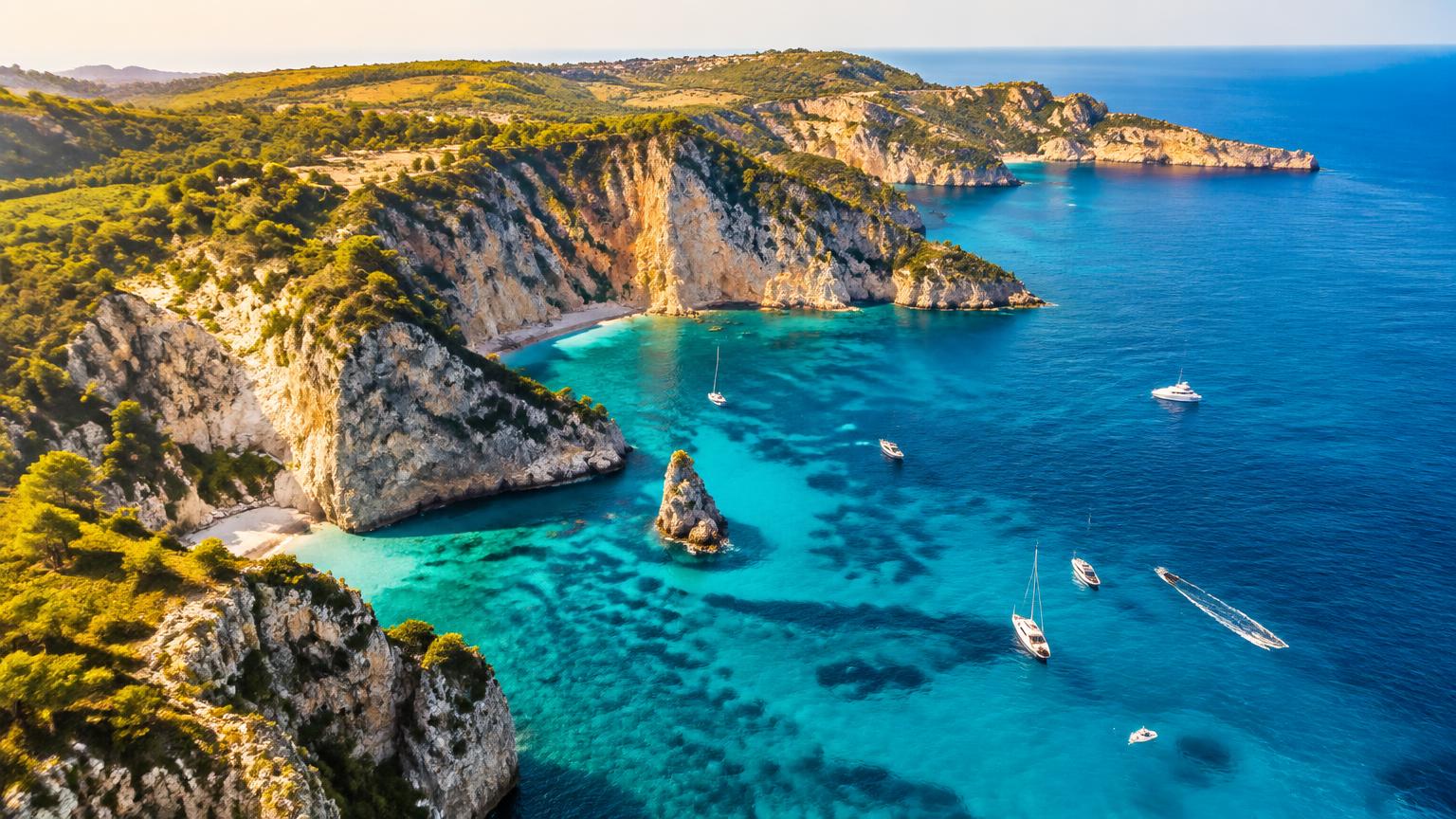
A sea trip is decided by three things: water temperature, how easy it is to actually reach the water, and what you eat afterwards. No single country wins at all three, but a handful of coastlines come close — and they suit very different trips.
Türkiye — the Turquoise Coast and the Aegean
Türkiye has around 8,000 km of coastline across four seas, and the stretch between Fethiye and Antalya — the Turquoise Coast — is one of the best combinations of water, landscape and price in the Mediterranean.
What makes it different: the water is properly clear and stays swimmable from May into late October, ancient ruins sit directly on the beaches, and a gulet (wooden boat) charter for a few days is affordable in a way the Greek or Italian equivalent simply is not.
Ölüdeniz & Kabak, Fethiye
The lagoon everyone has seen in photographs, plus the quieter valley beaches south of it. Paragliding off Babadağ lands on the beach.
Kaş & Kalkan
The connoisseurs' choice. Diving, sunken Lycian ruins at Kekova, small stone-house hotels and one of the best restaurant scenes on the coast.
Datça & Bozburun peninsulas
Where Turks go. Almond trees, clear coves, almost no mass tourism, and some of the finest late-September swimming in the country.
Çeşme & Alaçatı
İzmir's weekend coast — wind for kitesurfing, stone streets, and a breakfast culture worth the trip on its own.
Bodrum peninsula
Two versions in one place: the polished bays of Yalıkavak and Türkbükü, and the plain, cheap, wonderful village beaches on the north side.
Patara & Antalya's Lycian shore
An 18 km sand beach backed by dunes and a Roman city, with turtles nesting in summer.
The rest of the Mediterranean
Greece
Milos for volcanic coves, Naxos for family beaches, Crete for the pink sand at Elafonisi, Ikaria for nobody being there. Skip Santorini if swimming is the point — it barely has beaches.
Italy
Puglia and Sardinia beat Amalfi for actual swimming. Sardinia's Costa Smeralda water is the clearest in the western Mediterranean.
Croatia, Montenegro, Albania
The Adriatic is cold-clear and rocky rather than sandy. Albania's Riviera around Himarë is the value pick of the whole sea.
Spain & Portugal
The Balearics for coves (Menorca over Mallorca), Portugal's Algarve for cliffs, and the Atlantic west coast for surf rather than swimming.
Further afield
Maldives & Zanzibar
Indian Ocean water at its most unreal. Maldives for a single-resort trip, Zanzibar for a beach plus a real place around it.
Thailand & the Philippines
Krabi and Koh Lanta from November to March; Palawan for some of the best island-hopping on earth.
Caribbean
Turks and Caicos for sand quality, Dominican Republic for value, Curaçao for calm water and snorkelling straight off the shore.
Brazil & Mexico
Bahia and Fernando de Noronha in Brazil; Tulum and the Riviera Maya's cenotes as a swimming trip of a different kind.
Timing the water
The eastern Mediterranean is warmest not in July but in late August and September — the sea lags the air by about six weeks. That is why the last two weeks of September on Türkiye's coast are among the best swimming of the year, with the lowest prices of the season.
The Adriatic peaks in August. The Indian Ocean and Southeast Asia work best from November to March. The Caribbean is December to April, outside hurricane season.
Türkiye coast by coast
Kaş and Kalkan
Some of the clearest water in the country, diving straight off the rocks, Lycian tombs above the harbour. Best for couples and divers.
Fethiye, Ölüdeniz and Butterfly Valley
The postcard lagoon, paragliding off Babadağ, and boat days into hidden coves.
Datça and Bozburun
Quiet, pine-covered, almost no package tourism. A classic gulet departure point.
Bodrum peninsula
Split personality — Yalıkavak and Türkbükü for glamour, Gümüşlük and Akyarlar for calm, sunset fish and sea-level tables.
Çeşme and Alaçatı
Windsurfing, stone streets, İzmir's weekend crowd, and a serious breakfast culture.
Antalya to Side
Family territory: long beaches, ruins on the sand at Patara and Side, the most hotel choice.
The Black Sea coast
Not for swimming — for green mountains, Ayder's plateaus and a completely different Türkiye.
Sea temperature by month
May
20–22°C in the Turkish and Greek Med. Swimmable, empty, cheapest of the season.
June
24–25°C and the ideal balance of heat, price and crowd.
July–August
27–29°C, bath-warm, the busiest and most expensive weeks.
September
27°C and the sweet spot on the coast — warm sea, thinner crowds, lower prices.
October
24–25°C early in the month. Swimming holds in Türkiye, Cyprus and Crete well past the point most of Europe has given up.
Beyond the Mediterranean
The Seychelles and Mauritius
Among the best warm-water islands, with good infrastructure and no legal complications for any traveller.
Thailand's Andaman coast
November to April only; Krabi and the Trang islands beat Phuket.
Zanzibar and Mozambique
Extraordinary water; check local laws and conditions before booking.
Sardinia and Corsica
The clearest water in the western Mediterranean, best by car in June or September.
The Azores and Madeira
Atlantic, cooler, dramatic — swimming in volcanic pools rather than on sand.
How to plan a boat week
A gulet week along the Turkish coast is the cheapest way to do a luxury-feeling sea holiday, and it is the only way to reach the bays that matter — Kekova's sunken city, Gökkaya, Sedir Island's shell sand.
Book a cabin charter if you are two people and a full boat if you are six or more; the price per person crosses over around four. Depart from Fethiye, Göcek, Marmaris or Bodrum, travel in June or September, and expect anchoring rather than marinas most nights.
Greece, island by island
The Cyclades
Naxos is the all-rounder — long sand, mountain villages, honest tavernas and prices far below Mykonos. Milos for volcanic coves, Paros for the balance of both, Mykonos for the scene rather than the swimming.
Crete
Big enough to be a holiday of its own. Elafonisi and Falassarna in the west, the south-coast gorges for hike-and-swim days, and an island food culture that stands with any in the Mediterranean.
The Dodecanese and the east
Rhodes for a medieval old town with beaches attached, Karpathos for tradition, Symi for harbour colour. Ferries from Bodrum and Marmaris make two-country trips easy.
The Ionian
Corfu, Paxos, Ithaca and Lefkada — greener, Venetian in feel, and west-facing for sunset. Lefkada's Porto Katsiki is one of the most photographed beaches in Europe.
What Greece is for
Island variety, and the hopping itself. Nowhere else lets you build a different beach every day out of a ferry timetable.
Italy and the Adriatic, in depth
Sardinia
Costa Smeralda for the famous water; Ogliastra's coves and Chia in the south for similar clarity without the price tag. An island that needs a car and rewards one, best in June or September.
Puglia
The Salento coast around Otranto and Gallipoli: low cliffs, turquoise shallows, masserie stays, and some of the best value on the Italian side of the sea.
Sicily
San Vito Lo Capo and the Zingaro reserve in the west, the Aeolian islands for volcano-and-swim days, and food that rivals anywhere in Italy.
Amalfi and Capri
The most photographed coast in the country and the least room to actually swim. Come for the walks and the boat days; swim better elsewhere.
Croatia, Montenegro and Albania
Split's Marjan coves, Montenegro's Luštica peninsula, and the Albanian Riviera from Himarë to Ksamil — the last is the value story of the whole Mediterranean right now.
The Caribbean, the Indian Ocean and Southeast Asia
The Caribbean
Turks and Caicos for sand quality, the Dominican Republic for value, Curaçao and Bonaire for calm shore snorkelling. December to April, outside hurricane season.
The Maldives and Mauritius
One-resort simplicity and water you can read a book through. Mauritius adds mountains, a real interior and a self-driveable island.
Thailand
Krabi, Koh Lanta and the Trang islands over Phuket; Khao Lak for families. The Andaman coast runs on the November-to-April monsoon rhythm.
The Philippines
Palawan — El Nido and Coron — for limestone lagoons and island-hopping, Siargao for surf. Longer travel days in exchange for lower prices and thinner crowds.
The Seychelles and Zanzibar
The Seychelles for the granite-boulder beaches, Zanzibar for beach plus a real, living old town. Check current advisories for Zanzibar before booking.
Which coast for which traveller
A first big sea holiday
Antalya's coast in Türkiye, Crete, Mallorca or the Dominican Republic — long seasons, easy flights, hotels at every price.
A honeymoon
The Maldives or the Seychelles for the classic version; the boutique stone hotels of Kalkan and Kaş, or a Sardinian agriturismo in June, for something quieter.
On a budget
The Albanian Riviera, Türkiye's southern Aegean, the Dominican Republic's north coast, or Thailand's Trang islands.
Wind and water sports
Çeşme and Alaçatı for wind, Tarifa for kitesurfing, the Egyptian Red Sea for diving, Palawan and Bonaire for snorkelling.
Swimming above all else
Kaş, Kekova and Datça; Sardinia's east coast; Menorca's northern coves; Palawan's lagoons.
Spain and Portugal: the Atlantic and the Balearics
Spain is usually written off as package territory, which ignores that it holds two very different coasts: a warm, calm Mediterranean side and a cold, dramatic Atlantic one. Portugal is almost entirely the second, with the Algarve as the warm exception.
Menorca
The quietest Balearic. Cala Macarella, Cala Pregonda and the Camí de Cavalls coastal path. Low-rise building rules have kept the island closer to how Mallorca looked forty years ago.
Mallorca
Far more than its reputation: the Serra de Tramuntana in the north-west, Cala Varques and Caló des Moro in the south-east, and Palma as a genuinely good city to end on.
Formentera
Sand and shallows closer to the Caribbean than to Europe, reachable only by ferry from Ibiza — which is why it stays calmer.
Costa Brava
Begur, Tamariu and Cadaqués: coves between pine and rock, an hour and a half from Barcelona, best in June and September.
The Algarve
Lagos to Sagres for cliffs and cave beaches, Tavira eastwards for warm shallow lagoons and far fewer people. Water is Atlantic-cool — around 21–23°C in August.
Madeira and the Azores
Volcanic pools, whale watching and green mountains rather than sand. A good answer when you want sea air without a heatwave.
Croatia, Montenegro and Albania, coast by coast
Istria
Rovinj and Pula: pebbly, pine-shaded, Italian-influenced food, and the easiest Croatian coast to reach by car from Central Europe.
The Dalmatian islands
Hvar for the scene, Vis for the quiet and Stiniva cove, Brač for Zlatni Rat, Korčula for the walled old town. Ferries from Split make a week of hopping simple.
Dubrovnik and the south
Spectacular and crowded. Base on Lopud or in Cavtat and visit the old town early, then swim away from it.
Montenegro
The Bay of Kotor is for views rather than swimming; the Luštica peninsula, Sveti Stefan and Ulcinj's long sand are where you actually get in the water.
Albania
Himarë, Dhërmi, Gjipe and Ksamil on the Riviera: Ionian-clear water, prices roughly half of Greece across the strait, and a road that has improved fast. Go in June or late September; August is now busy.
The Red Sea, the Gulf and North Africa
Egypt's Red Sea
Among the best-value diving and snorkelling anywhere: Marsa Alam and the southern reefs for coral, Dahab for freedivers and relaxed days, Hurghada for the cheapest flights and hotels. Warm enough to swim in January.
Sharm el-Sheikh and Ras Mohammed
Wall dives straight off the shore and reliable year-round sun. Good for a winter sea week when Europe is closed.
Jordan's Aqaba
A short, calm stretch of Red Sea that pairs naturally with Petra and Wadi Rum — a rare trip that combines ruins, desert and reef in a week.
Oman
Muscat's beaches, the Daymaniyat islands for snorkelling and the Musandam fjords by dhow. Quiet, well organised, and best from October to April.
Tunisia and Morocco
Djerba for shallow warm water and value; Essaouira and Taghazout for Atlantic wind and surf rather than swimming.
The Americas and the Pacific
Mexico's Caribbean
Tulum and Playa del Carmen for the famous strip, Isla Holbox for shallow calm water, Cozumel for reef diving. January to April avoids both hurricanes and the worst sargassum.
Mexico's Pacific
Oaxaca's Zipolite and Mazunte, and Sayulita further north — surf-leaning, cheaper, and far less developed than the Caribbean side.
Brazil
Bahia's Trancoso and Itacaré, Fernando de Noronha for protected reefs, and Florianópolis for a city with dozens of beaches attached.
Colombia and Central America
Tayrona's jungle-backed bays, the Rosario islands off Cartagena, Belize's cayes for the barrier reef, and Costa Rica's Nicoya peninsula for surf plus wildlife.
Australia and the Pacific
Whitehaven and the Whitsundays, Western Australia's Ningaloo for swimming with whale sharks, and Fiji or French Polynesia when the trip is a one-off.
Sea holidays by budget, week by week
Under £700 a week per person
Albania, Türkiye's southern Aegean outside August, Egypt's Hurghada coast, Bulgaria's southern beaches, or Puglia by car with a rural apartment.
£700–£1,400
Greece outside Mykonos and Santorini, Sardinia and Sicily in June, Menorca, Croatia's Dalmatian islands, Portugal's eastern Algarve.
£1,400–£2,500
A gulet cabin week, a Cyclades multi-island trip in high season, Corsica in August, or the Dominican Republic and Mexico in winter.
Above £2,500
The Maldives, the Seychelles, French Polynesia, Palawan with domestic flights, or a full private boat charter anywhere in the Mediterranean.
Greece: which island group, and which town
Greece is not one destination but five or six island systems with different weather, ferry logic and personalities. Choosing the group first, and the island second, saves most of the disappointment people report from Greek summers.
Cyclades — Naxos
The practical all-rounder: a long sandy west coast at Agios Prokopios, Plaka and Mikri Vigla, mountain villages at Halki and Apeiranthos, and food that is better and cheaper than on its famous neighbours.
Cyclades — Paros and Antiparos
Naoussa for evenings, Kolymbithres and Santa Maria for swimming, and a twenty-minute ferry to Antiparos when Paros feels busy.
Cyclades — Milos
Volcanic coastline: Sarakiniko's white rock, Tsigrado and Firiplaka in the south, and boat trips to Kleftiko. Base in Pollonia rather than Adamas.
Cyclades — Folegandros, Sifnos, Serifos
The quiet trio. Folegandros for the cliff-top Chora, Sifnos for the best village cooking in the Cyclades, Serifos for empty beaches a few hours from Athens.
Cyclades — Santorini and Mykonos
Both deliver exactly what they promise and both are crowded and expensive from June to September. Go in late April, May or October, and swim at Vlychada or Agios Sostis rather than the headline spots.
Ionian — Kefalonia, Lefkada, Zakynthos, Corfu
Greener, wetter in winter, milder in summer. Myrtos and Antisamos on Kefalonia, Egremni and Porto Katsiki on Lefkada, the north-west coast of Corfu around Agios Georgios, and Zakynthos for turtles at Laganas Bay.
Dodecanese — Rhodes, Symi, Karpathos, Patmos
Closest to Türkiye and the sunniest group. Rhodes for the medieval old town plus Lindos, Symi for the harbour, Karpathos for wind and wild beaches, Patmos for quiet and a UNESCO monastery.
Sporades — Skopelos, Alonissos, Skiathos
Pine forest running straight into clear water. Skopelos for coves such as Kastani and Panormos, Alonissos for the marine park and Skiathos for Lalaria and nightlife.
Crete
Big enough for a fortnight: Chania and the west for Balos, Elafonisi and Falasarna; the south coast at Loutro and Sougia for isolation; Heraklion for Knossos and the Archaeological Museum; Lasithi for Vai's palm beach.
The Peloponnese, by car
Mainland but coastal: Monemvasia's rock town, Elafonisos' Simos beach, Voidokilia's perfect crescent near Pylos, and Mani's stone towers — cheaper than the islands and easy without ferries.
Italy: five coastlines that behave differently
Sardinia
The clearest water in the Mediterranean. Costa Smeralda in the north for glamour, La Maddalena archipelago for boat days, Cala Goloritzé and Cala Mariolu on the Gulf of Orosei, and Chia and Tuerredda in the quieter south.
Sicily
Sea plus a full country's worth of history. San Vito Lo Capo and the Zingaro reserve in the west, Scala dei Turchi near Agrigento, Ortigia in Syracuse as a base, and the Aeolian islands — Salina for food, Stromboli for the volcano.
Puglia
Polignano a Mare and the Adriatic cliffs, Torre Guaceto's protected shallows, the Salento tip at Pescoluse, and Otranto and Gallipoli as evening towns. Masserie inland are better value than the seafront.
Amalfi and the Cilento
Positano, Amalfi and Ravello are scenery more than swimming. Drive south to the Cilento — Palinuro, Marina di Camerota — for the same coastline at half the price.
Tuscany and Elba
Argentario, Feniglia's pine-backed sand and Elba's Sansone and Cavoli for a family week that pairs with Florence and Siena.
Türkiye's coast, town by town
The Turkish coast is one of the strongest value propositions in the Mediterranean — sea at 27°C into October, pine-backed coves, ancient cities at the back of the beach — but it is long, and the towns differ sharply.
Çeşme and Alaçatı
Aegean wind, stone streets, some of the country's best breakfast culture, and the beaches of Ilıca and Altınkum.
Bodrum peninsula
Gümüşlük for sunset fish, Yalıkavak for the marina scene, Bitez and Torba for calm swimming.
Datça and Bozburun
The quietest stretch: almond groves, small pensions, gulet departures and almost no package tourism.
Fethiye, Ölüdeniz and Kabak
The Blue Lagoon, paragliding off Babadağ, and the Lycian Way footpath connecting valleys and beaches.
Kaş and Kalkan
Diving, sea kayaking over the sunken city at Kekova, and Patara's eighteen-kilometre beach with a Roman city behind it.
Antalya and Side
City beaches at Konyaaltı and Lara plus ancient theatres at Aspendos and Perge within an hour.
Frequently asked questions
Which country has the best beaches in the Mediterranean?
There is no undisputed answer. The Turquoise Coast in Türkiye, the Greek islands, Sardinia and Albania's Riviera are all among the best — Türkiye and Albania for value, Greece for island variety, Sardinia for water clarity.
When is the sea warmest in Türkiye?
Late August through September, when water temperatures sit around 26–28°C on the Aegean and Mediterranean coasts. September is the best all-round month.
Where should I go for a beach holiday in winter?
Thailand, the Maldives, Zanzibar, the Philippines and the Caribbean all peak between November and April.
Which country has the best sea holiday?
It depends what you are measuring. If value is the measure, Türkiye and Albania come out on top: 27°C water into October, pine-backed coves and prices well below Greece or Italy. Greece wins on island variety, Sardinia on water clarity, the Caribbean on sand.
Where is the clearest water in Türkiye?
Kaş and the Kekova stretch, then the Datça and Bozburun peninsulas. All three are rocky rather than sandy, which is exactly why the water stays clear.
When is the best month for a beach holiday in the Mediterranean?
September. The sea is at its warmest after a summer of heating, the crowds have gone home, and prices drop sharply in the second week.
Where can you still swim in Europe in October?
Southern Türkiye, Cyprus, Crete, Rhodes, Malta and the Canary Islands. The Turkish coast around Kaş and Antalya is the most reliable.
Which Greek island has the best beaches?
Depends on the trip. Naxos for long sand and value, Milos for volcanic coves, Crete for Elafonisi and Falassarna, Lefkada for the Ionian's photographed cliffs, Karpathos if you want emptiness. No single island wins every category.
Is Albania really cheaper than Greece?
Yes, noticeably — roughly 30–50% less on accommodation and eating out, for water of similar clarity across the same strait. The trade-offs are fewer direct flights, busier roads and August crowds in Ksamil.
Where can you swim in the sea in winter?
Egypt's Red Sea, the Canary Islands, the Caribbean from December to April, Thailand's Andaman coast, Oman and the Maldives. In Europe, the Canaries and southern Cyprus are the only dependable options.
Which coast is best for families with small children?
Shallow, sandy and short-transfer matters more than clarity: Türkiye's Side and Belek, Menorca's south coast, Croatia's Istria, Puglia's Ionian side, the eastern Algarve around Tavira, or Mexico's Isla Holbox.
Where is the best snorkelling and diving?
Egypt's southern Red Sea and Dahab for value, Bonaire and Curaçao for shore diving, Palawan and Raja Ampat for biodiversity, the Great Barrier Reef and Ningaloo in Australia, and Cozumel for drift dives.
Which Greek island should a first-timer choose?
Naxos or Paros for a balance of beaches, villages and ferry links; Crete if you want two weeks and a car; Kefalonia if you want green landscapes and calmer water. Santorini and Mykonos are better as a two-night add-on than as the whole trip.
Is Italy or Greece better for a beach holiday?
They are among the strongest options in Europe and they answer different briefs. Greece is easier for island hopping and generally cheaper; Sardinia and Sicily beat most Greek islands on water clarity and food variety. Both peak in June and September.
Where is the sea warmest in October?
The Turkish Mediterranean, Cyprus, the Dodecanese, Crete, southern Sicily and Malta all hold 24–26°C into mid-October, as do the Red Sea and the Canaries further afield.
Keep reading
Plan the trip properly
Wealin has day-by-day guides and restaurant lists for 159 cities — and turns your own trips into a book you keep.