
Food
Where to travel for food — the best countries to eat in
28 min read · Updated September 2026
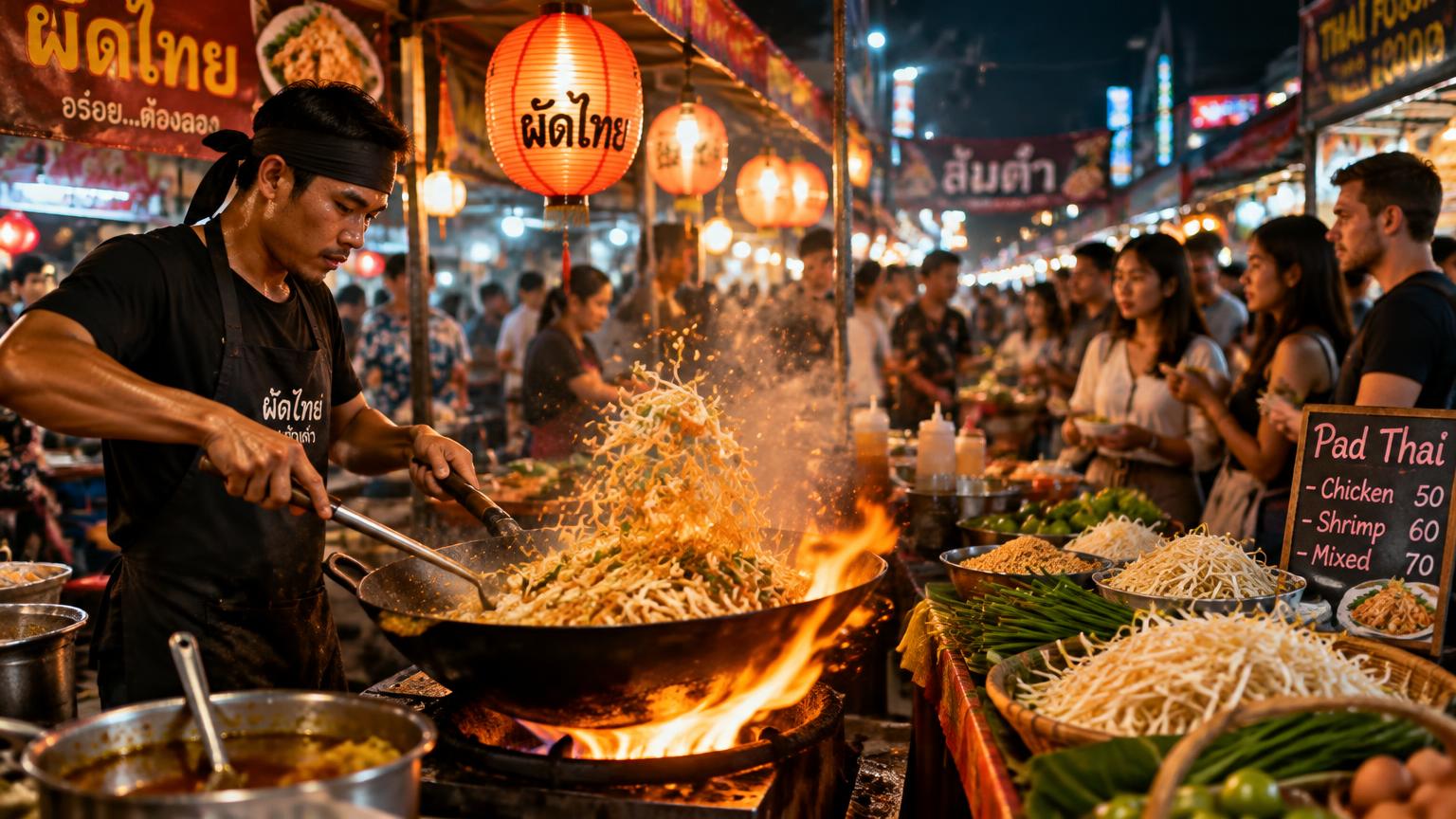
A food country is not just one with good restaurants. It is a place where the cheap meal is as good as the expensive one, where every region cooks differently, and where the calendar of the year is still organised around what is ripe.
Very few countries pass all three tests. These do.
Türkiye — one of the great food countries, and remarkable value
Türkiye has the rare combination: an imperial kitchen tradition, a peasant kitchen tradition, seven regions that cook almost nothing alike, and a breakfast culture with few equals anywhere.
Start in Istanbul, but understand that Istanbul is a summary. The real depth is regional.
Gaziantep
A UNESCO City of Gastronomy and, for many people, one of the best eating cities on the planet. Baklava made with Antep pistachios, katmer for breakfast, beyran soup at dawn, dozens of kebap variants that never left the city.
Istanbul
Everything at once. Islak hamburger at 2am in Taksim, çıtır mantı, İskender, balık ekmek at Eminönü, a full Van-style breakfast in Beşiktaş, plus the country's serious tasting menus.
Hatay (Antakya)
The most Levantine kitchen in Türkiye — künefe, muhammara, sour-dough tepsi kebabı, and a culinary identity rebuilt with enormous determination after the earthquakes.
Adana & Mersin
The kebap capital and the tantuni capital, half an hour apart.
İzmir & the Aegean
Olive-oil vegetables, wild herbs (ot), boyoz for breakfast, and the country's best fish.
Black Sea coast
Corn bread, hamsi (anchovies) every possible way, and Trabzon's muhlama — cheese and butter and corn flour.
The other great food countries
Japan
Arguably the highest ceiling of any food culture, and no gap between the £8 bowl and the £300 counter in terms of care. Base in Tokyo, Osaka for the street food, Kyoto for kaiseki.
Italy
Twenty regions and twenty kitchens. Bologna and Modena for pasta and vinegar, Naples for pizza, Sicily for street food, Piedmont for truffles and wine.
Mexico
Oaxaca for mole and mezcal, Mexico City for everything, the Yucatán for cochinita pibil. Some of the best value fine dining in the world.
Thailand & Vietnam
Street food that ranks with anywhere on earth. Bangkok and Chiang Mai; Hanoi for bún chả and Hội An for cao lầu.
Peru
Ceviche, Nikkei and Chifa fusion, and 4,000 potato varieties. Lima is the food capital of South America.
Spain
San Sebastián for pintxos and the highest concentration of starred restaurants per head; Andalusia for the fried fish and the sherry.
Georgia & Lebanon
Two underrated giants — khachapuri and qvevri wine in Tbilisi, and a mezze table in Beirut that ranks with anywhere.
India
Not one cuisine but a dozen. Kerala for coconut and seafood, Punjab for the tandoor, Kolkata for sweets, Tamil Nadu for breakfast.
How to plan a food trip
Eat breakfast where locals eat breakfast — it is one of the most reliable windows into a food culture and it costs nothing. Go to the market on your first morning and ask what is in season; build the rest of the trip around the answer.
Do one cooking class or one producer visit (an olive mill, a cheese cave, a pistachio orchard) per trip. It changes how everything else tastes. And leave your last dinner unbooked for whatever you have fallen in love with.
Türkiye region by region
Gaziantep
UNESCO City of Gastronomy and the deepest single food city in the country. Baklava with forty layers, beyran soup at 7am, lahmacun the width of a plate, pistachios in everything.
Hatay (Antakya)
Arab, Armenian and Turkish cooking in one kitchen — künefe, muhammara, tepsi kebabı, oruk.
Adana
The kebab that everyone else copies, cooked over open coal with şalgam and grilled peppers beside it.
Istanbul
Everything, plus the sea: balık ekmek on the water, ıslak hamburger at 3am in Taksim, midye dolma, Beyoğlu meyhanes with rakı and forty cold mezes.
İzmir and the Aegean
Olive oil vegetables, wild greens, boyoz for breakfast, seafood that needs nothing but lemon.
The Black Sea
Hamsi (anchovy) in fifteen forms, Trabzon butter, corn bread, muhlama.
Konya and central Anatolia
Etli ekmek, fırın kebabı, tandır — slower, meatier, wood-fired.
The Turkish breakfast, explained
Serpme kahvaltı is the strongest argument for Turkish food culture and the cheapest luxury in the country: twenty-odd small plates for the price of a London sandwich.
Expect white cheese and aged kaşar, black and green olives, cucumber and tomato, butter and honey or kaymak, several jams, sucuk fried with egg, menemen, börek, fresh bread, and tea refilled until you stop them. Allow two hours, go hungry, and do it in Van, Çeşme, Alaçatı or any Istanbul rooftop on a Sunday.
The other great food countries
Japan
The highest average quality anywhere. Sushi and kaiseki at the top, but the 600-yen bowl of ramen is the real argument.
Italy
Twenty regional cuisines pretending to be one. Bologna, Naples, Palermo and Puglia are the strongest four weeks you can eat.
Mexico
Oaxaca's moles, Mexico City's tacos, Yucatán's cochinita pibil, Baja's seafood.
Thailand and Vietnam
Street food as a national infrastructure. Bangkok, Chiang Mai, Hanoi, Hội An.
Spain
San Sebastián's pintxos, Galicia's shellfish, Andalusian frying, and the best value fine dining in western Europe.
Peru
Lima's ceviche and Andean produce; the most interesting fusion cooking in the Americas.
Georgia
Khachapuri, khinkali, 8,000 years of wine, and a supra table that does not stop.
Eating well as a vegetarian or vegan
Türkiye
Far easier than its kebab reputation suggests — zeytinyağlı olive-oil vegetables, mezes, mercimek soup, gözleme and the whole breakfast table.
India
The best vegetarian country on earth; most of the south is vegetarian by default.
Italy
Pasta, pizza, contorni and Sicilian street food carry an entire trip.
Israel and Lebanon
Mezze culture means half the menu is already plant-based.
Vietnam and Thailand
Easy with one phrase each, though fish sauce hides in most dishes — learn to ask.
A one-week Türkiye food itinerary
Fly into Istanbul for two nights: breakfast in Beşiktaş, a meyhane dinner in Beyoğlu, the Spice Bazaar and a fish sandwich on the Bosphorus.
Fly to Gaziantep for two nights — baklava at two rival houses, beyran at dawn, the mosaic museum between meals. Continue to Hatay for two nights of künefe and Levantine cooking, then back to Istanbul. That whole week costs less than three days in Copenhagen.
Italy, region by region
Emilia-Romagna
Bologna and Modena — tagliatelle al ragù, tortellini in brodo, parmigiano dairies and traditional balsamic. Arguably the most consistently well-fed week in Italy.
Naples and Campania
Pizza as it was intended, fried snacks on every corner, and produce — San Marzano tomatoes, Amalfi lemons — that tastes like an argument for the region.
Sicily
Arab-meets-Italian: arancine, panelle, cannoli, Bronte pistachios, and a Palermo street-food culture older than most of Europe's cuisines.
Puglia and the deep south
Orecchiette, burrata, Altamura bread, and vegetables grown in something close to holiday weather.
Piedmont and the north-west
White truffles in Alba, tajarin, Barolo, and the Slow Food movement's home turf around Bra.
East Asia and the counter cultures
Japan
Tokyo for everything, Osaka for street food, Kanazawa for seafood, Fukuoka for ramen stalls. Lunch omakase makes the counter affordable — among the most reliable luxury meals anywhere for the money.
South Korea
Seoul's grill rooms and market stalls, temple cuisine for the slow version, and an all-night eating infrastructure that is hard to match anywhere.
Taiwan
Night markets as a national institution: soup dumplings, beef noodle soup, stinky tofu, and breakfast shops queueing for danbing and fresh soy milk.
Hong Kong
Dim sum before 11am in a loud room with trolleys, roast goose, dai pai dong classics, and some of the densest Cantonese comfort food on earth.
The Americas, in depth
Oaxaca, Mexico
Seven moles, memelas, tlayudas, mezcal palenques and market meals that justify the flight on their own.
Mexico City
Tacos al pastor at midnight, carnitas at dawn, every regional cuisine of the country represented somewhere in the sprawl, plus a mid-price restaurant scene with a strong case for the best value in the Americas.
The Yucatán and Baja
Cochinita pibil and sopa de lima in Mérida; fish tacos and Valle de Guadalupe wine in the north.
Peru
Lima's ceviche bars and Nikkei kitchens, Arequipa's picanterías, and 4,000 potato varieties in the Sacred Valley's markets.
The Southeast Asia street-food trail
Bangkok
Boat noodles, khao soi up in Chiang Mai, and Chinatown's Yaowarat Road after dark — one of the great eating streets anywhere.
Hanoi and Hội An
Bún chả, phở at plastic stools, serious bánh mì debates, and cao lầu noodles that exist nowhere else.
Penang
George Town's hawker courts — char kway teow, asam laksa, cendol — a strong case for Asia's most concentrated street food.
Singapore
Hawker centres where a few pounds buy meals held to a national standard: chicken rice, chilli crab, laksa.
Underrated food cities in Europe
Lyon, France
Bouchons, offal and silk-workers' dishes, praline brioche — France's kitchen without Paris's prices.
Thessaloniki, Greece
Ottoman and Balkan layers, seaside psarotavernas, bougatsa at dawn, and a late-night eating rhythm all its own.
Porto, Portugal
Tripas à moda do Porto, the francesinha sandwich, and a fish-grilling culture along the whole coast.
Kraków and Wrocław, Poland
Pierogi, żurek, the milk-bar revival, and some of Europe's lowest restaurant bills.
Italy, region by region
Italy is not one cuisine but twenty, and the gap between two neighbouring regions is often wider than the gap between two countries elsewhere. Choose the region first, the city second.
Emilia-Romagna
Bologna, Modena and Parma: ragù, tortellini in brodo, Parmigiano dairies and balsamic cellars you can visit in a morning. The densest food region in the country.
Naples and Campania
Pizza in its original form, the seafood of the Amalfi villages, buffalo mozzarella from Caserta and a coffee culture that runs on standing at the bar.
Sicily
Arab-Norman layers: arancini, pasta alle sarde, granita with brioche for breakfast, and Catania's fish market as the best single food hour on the island.
Rome
Four pastas done seriously — cacio e pepe, carbonara, amatriciana, gricia — plus Jewish-Roman artichokes and Testaccio for the offal tradition.
Piedmont
Truffles in autumn, Barolo, agnolotti del plin and the slow-food movement's birthplace at Bra. The most wine-led region to eat in.
Japan, Korea and East Asia
Tokyo
More range than any city on earth: £8 standing soba at breakfast, Toyosu's tuna, department-store food halls, and a tasting menu scene that spans every price. Book the small counters weeks out.
Osaka and Kyoto
Osaka is the street city — takoyaki, okonomiyaki, kushikatsu in Shinsekai. Kyoto is the formal one: kaiseki, tofu temples and the Nishiki market for produce.
Fukuoka
Tonkotsu ramen at its source and yatai street stalls along the river. The easiest Japanese food city to eat well in without reservations.
Seoul
Korean barbecue, Gwangjang market's bindaetteok, late-night pojangmacha tents, and a fried-chicken-and-beer culture that deserves its own trip.
Taipei and Hong Kong
Taipei for night markets and beef noodle soup; Hong Kong for dim sum, roast goose and cha chaan teng diners — two of Asia's most efficient eating cities.
Mexico, Peru and Latin America
Mexico City
Tacos al pastor at midnight, market kitchens in Coyoacán and San Juan, and a fine-dining scene — Pujol, Quintonil, Rosetta — that rewrote how the world reads Mexican food.
Oaxaca
Seven moles, tlayudas, mezcal palenques within an hour's drive, and the strongest market culture in the country at Mercado 20 de Noviembre.
Lima
Ceviche at lunchtime only, Nikkei and Chifa cooking from Japanese and Chinese migration, and tasting menus that trace Peru's altitudes course by course.
Cusco and the Andes
Potatoes in dozens of varieties, chicha, and Andean ingredients cooked plainly. A different country to Lima on the plate.
Buenos Aires and São Paulo
Argentina for parrilla, Italian-Argentine pasta and Malbec; São Paulo for Japanese-Brazilian cooking, Middle Eastern bakeries and one of the widest restaurant ranges in the Americas.
Southeast Asia and India
Bangkok
Boat noodles, som tam, Chinatown's evening grills and a Michelin-listed street stall culture. The best value serious eating anywhere.
Chiang Mai and the north
Khao soi, sai ua sausage and fermented northern Thai food — softer, herbier and cheaper than the capital.
Vietnam
Hanoi for phở, bún chả and egg coffee; Huế for imperial cooking and the spiciest food in the country; Ho Chi Minh City for bánh mì and the southern sweet-sour balance.
Malaysia and Singapore
Penang's hawker stalls — char kway teow, assam laksa — and Singapore's hawker centres, where a world-class meal still costs a few pounds.
India
Delhi for Mughlai and street chaat, Kolkata for Bengali fish and sweets, Chennai and Kerala for rice, coconut and seafood, Amritsar for Punjabi dhabas. Pick one region per trip.
Europe beyond Italy and France
Spain
San Sebastián for pintxos and the highest star density per head, Seville for tapas, Galicia for shellfish, Valencia for the actual paella. Eat late; nothing serious starts before 21:00.
France
Lyon's bouchons for the classic version, Marseille for bouillabaisse and North African influence, Bordeaux and Burgundy for wine-led eating, Paris for the bistro revival and bakeries.
Portugal
Lisbon's tascas and pastéis, Porto's tripe and francesinha, and the Algarve's grilled fish. One of the best-value food countries in Western Europe.
Georgia
Khinkali, khachapuri, walnut-heavy vegetable dishes and 8,000-year-old qvevri winemaking. Tbilisi is the region's most exciting eating city right now.
Greece and the Balkans
Athens for modern Greek tavernas and the Varvakios market, Crete for the strongest island food tradition, and Belgrade and Sarajevo for grilled meat and Ottoman pastry lines.
France and Spain, city by city
Lyon
Bouchons for quenelles and andouillette, Les Halles Paul Bocuse for cheese and charcuterie, and Beaujolais vineyards forty minutes north.
Marseille and Nice
Bouillabaisse and North African cooking in Marseille's Noailles market; socca, pissaladière and Ligurian influence in Nice's Vieux Ville.
Bordeaux and Toulouse
Canelés, oysters trucked in from Arcachon, cassoulet and duck across the south-west, with wine day trips in every direction.
San Sebastián and Bilbao
Pintxos crawls along Calle 31 de Agosto, grilled turbot at Getaria, and Bilbao's Mercado de la Ribera for a cheaper version of the same.
Seville and Cádiz
Andalusian tapas at their best value in Spain: fried fish, salmorejo, sherry from Jerez, and late dinners.
Valencia and Galicia
Paella cooked over orange wood in Albufera; octopus, percebes and Albariño in Santiago, Vigo and the Rías Baixas.
Türkiye, Greece and the eastern Mediterranean
Gaziantep
A UNESCO City of Gastronomy: baklava with pistachios from the surrounding hills, katmer for breakfast, and dozens of kebap styles found nowhere else.
Istanbul
Breakfast in Beşiktaş and Kadıköy, fish and meze along the Bosphorus at Arnavutköy, ıslak hamburger at midnight in Taksim, and İskender in the Anatolian-side back streets.
Izmir and Hatay
Aegean herbs, olive oil dishes and seafood in Izmir; Hatay for hummus, künefe and a Levantine kitchen shared with Syria.
Athens and Thessaloniki
Athens for neighbourhood tavernas in Koukaki and Pangrati and the Varvakios market; Thessaloniki for bougatsa, mussels and Ottoman-Balkan layering.
Crete and Naxos
Greece's clearest regional cooking: wild greens, raki, graviera and slow-cooked lamb, often at village level rather than in restaurants.
Beirut and Amman
Mezze, mana'eesh and mountain villages above Beirut; Amman's Rainbow Street kitchens and mansaf as the national set piece.
Asia beyond the obvious
Chengdu and Xi'an
Sichuan pepper, hotpot and tea houses in Chengdu; hand-pulled noodles, roujiamo and the Muslim Quarter in Xi'an.
Guangzhou and Hong Kong
Cantonese cooking at source: dim sum at breakfast, roast goose, and dai pai dong dinners.
Hanoi and Ho Chi Minh City
Phở, bún chả and egg coffee in Hanoi's Old Quarter; bánh mì, cơm tấm and southern sweetness in Saigon's District 4 and Bình Thạnh.
Penang and Kuala Lumpur
Char kway teow, assam laksa and nasi kandar in George Town; Malaysia's Chinese, Malay and Tamil kitchens side by side.
Osaka and Fukuoka
Okonomiyaki, kushikatsu and kuidaore culture in Osaka; tonkotsu ramen and yatai street stalls along the river in Fukuoka.
Seoul and Jeonju
Gwangjang market, Korean barbecue and late-night pojangmacha; Jeonju for bibimbap and hanok-district home cooking.
Frequently asked questions
Which country has the best food in the world?
By range and value, Türkiye, Italy, Japan, Mexico and China are the usual five. Türkiye's advantage is that its regional kitchens differ dramatically and an outstanding meal can still cost a few pounds.
What is the best food city in Türkiye?
Gaziantep — a UNESCO City of Gastronomy, famous for pistachio baklava, katmer and dozens of local kebaps. Istanbul is the best single base; Hatay and Adana are the other essential stops.
How much does a good meal cost in Türkiye?
A superb neighbourhood lunch can be a few pounds, a full Turkish breakfast for two is modest, and even the country's serious tasting menus sit far below their European equivalents.
Which country has the best food in the world?
Italy, Japan, Mexico, Thailand, China and Türkiye are the answers that come up most often, and each is a different argument rather than a ranked winner. Weighing quality against price and regional variety together, Türkiye has one of the strongest cases.
What is the food capital of Türkiye?
Gaziantep. It is a UNESCO City of Gastronomy, the home of pistachio baklava, and a city where a two-pound breakfast soup is a serious culinary event. Hatay and Adana are close behind.
What should I eat in Istanbul?
A full serpme breakfast, balık ekmek by the water, ıslak hamburger late at night, çıtır mantı, İskender kebap, midye dolma, and one long meyhane dinner with rakı and mezes.
Which is the cheapest country for great food?
Türkiye, Vietnam, Thailand, Mexico and Georgia. In all five you can eat extremely well every day for under £20.
Which country is best for food?
There is no single answer, and anyone giving one is selling something. Italy and Japan lead most rankings for consistency and depth, Mexico and Thailand for street eating, Türkiye and Peru for the range between home cooking and fine dining, France for technique. Pick by appetite, not by league table.
What is the cheapest country for a food trip?
Vietnam, Thailand, Mexico, Türkiye, Georgia and Portugal all let you eat exceptionally for very little. In Bangkok or Hanoi, £10 a day covers three good meals; in Lisbon or Istanbul, closer to £25.
How do I find good restaurants that locals actually use?
Eat at local hours, walk one street back from the main square, look for a short handwritten menu in the local language only, and check whether the room is full of people who look like they come weekly.
Which cities are best for a weekend food trip from Europe?
Bologna, San Sebastián, Lyon, Lisbon, Athens, Istanbul, Naples and Copenhagen — all within a short flight and all walkable enough to fit five or six meals into two days.
Which single city is best for a food trip?
There is no undisputed winner. Istanbul, Tokyo, Mexico City, Lyon, Bangkok, Bologna, San Sebastián and Hong Kong are all among the strongest choices, and they suit different appetites, budgets and trip lengths.
How many days do you need for a food city?
Three to four nights. That is enough for two market mornings, one day trip to a producing region, and four or five dinners without repeating a style.
Keep reading
Plan the trip properly
Wealin has day-by-day guides and restaurant lists for 159 cities — and turns your own trips into a book you keep.