
Culture
Where to travel for history — the world's greatest ancient sites
28 min read · Updated September 2026
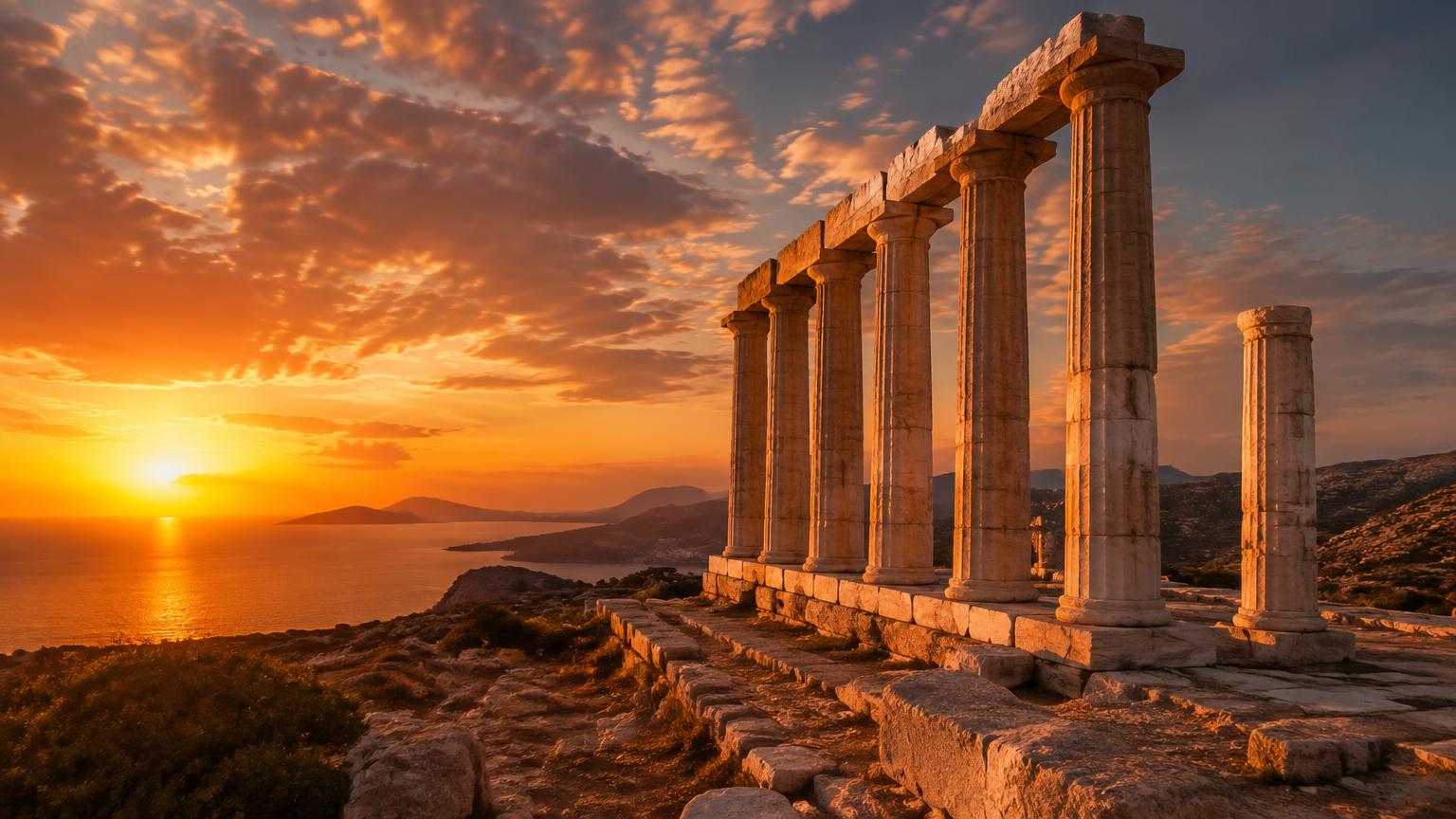
The best history trips are the ones where you stand inside the thing rather than behind a rope. That rules out a surprising number of famous sites and points you towards a handful of countries where the past is simply lying around in the landscape.
Türkiye — layers on layers
Few countries stack this many civilisations in one place: the world's oldest known temple, Hittite capitals, Greek and Roman cities in near-complete condition, Byzantium, the Seljuks and the Ottomans — often within a single day's drive.
Göbeklitepe
Near Şanlıurfa, roughly 11,500 years old — older than agriculture, pottery and writing. It rewrote the timeline of civilisation. Pair it with the Şanlıurfa archaeology museum.
Ephesus
One of the best-preserved classical cities in the Mediterranean. Pay for the Terrace Houses; they are the part people remember.
Istanbul
Hagia Sophia, the Basilica Cistern, Topkapı and the Theodosian walls — 1,600 years of capital city in one district.
Cappadocia
Rock-cut churches with Byzantine frescoes and the underground cities of Derinkuyu and Kaymaklı.
Aphrodisias, Pergamon, Hierapolis
The three that make the Aegean a full week rather than a day trip. Aphrodisias has one of the finest stadiums of the ancient world.
Nemrut Dağı & Ani
Giant stone heads on a summit at sunrise; a ruined medieval Armenian capital on the Kars steppe.
The other essential history countries
Egypt
Giza, Luxor's Karnak and the Valley of the Kings, Abu Simbel, and the Grand Egyptian Museum. Go between November and March.
Italy
Rome, Pompeii and Herculaneum (Herculaneum is smaller and better preserved), Paestum's Greek temples, Ostia Antica as the empty Pompeii near Rome.
Greece
The Acropolis and its museum, Delphi's setting, Knossos on Crete, and Olympia.
Peru & Mexico
Machu Picchu with the Sacred Valley (permits months ahead), Chan Chan and Caral in the north; Teotihuacán, Chichén Itzá, Palenque and Monte Albán in Mexico.
Jordan
Petra deserves two days and one of them should start at dawn. Jerash is the Roman city nobody plans for and everybody remembers.
Cambodia & Sri Lanka
Angkor over three days rather than one; Sigiriya, Polonnaruwa and Anuradhapura in Sri Lanka's cultural triangle.
Iraq, Uzbekistan & Iran
For the Silk Road and Mesopotamia. Uzbekistan — Samarkand, Bukhara, Khiva — is now straightforward to visit and extraordinary.
United Kingdom & Ireland
Stonehenge and Avebury, Hadrian's Wall, Orkney's Skara Brae (older than the pyramids) and Newgrange.
How to actually enjoy a ruin
Hire a licensed local guide for the first big site of any trip. Two hours of context makes every later site legible and it is the cheapest upgrade in travel.
Go at opening or in the last two hours of the day — the light is better, the heat is survivable and the tour buses are elsewhere. Read one short book about the place before you go rather than the plaques while you are there. And always visit the local archaeology museum: the site gives you the scale, the museum gives you the objects.
Season by season
Egypt, Jordan and the Gulf: November to March. Türkiye, Greece and Italy: April to early June and September to October — the summer heat at Ephesus or Pompeii at midday is genuinely dangerous. Peru: May to September, the dry season. Cambodia: November to February.
Türkiye's essential sites
Göbeklitepe
The oldest known monumental architecture on earth — around 11,500 years old, 7,000 years before Stonehenge. Near Şanlıurfa; pair it with the city's mosaic museum and the Karahantepe dig.
Ephesus
One of the best-preserved classical cities in the Mediterranean. Go at opening, buy the Terrace Houses ticket, and finish at the Basilica of St John.
Cappadocia
Rock-cut churches with intact Byzantine frescoes, underground cities that sheltered thousands, and the balloons at dawn.
Istanbul
Roman, Byzantine and Ottoman layers in a two-kilometre walk: Hagia Sophia, the Basilica Cistern, Topkapı, the Chora mosaics, the land walls.
Troy and Gallipoli
Nine cities stacked on one mound, and a First World War battlefield an hour away.
Nemrut Dağı
Colossal stone heads on a mountain summit at 2,150m, best at sunrise.
Aphrodisias and Hierapolis
Quieter than Ephesus, better sculpture at Aphrodisias, and Pamukkale's white terraces next door.
History trips by era
Prehistory
Şanlıurfa (Göbeklitepe, Karahantepe), Orkney's Skara Brae, Malta's temples, the Lascaux caves.
Ancient Egypt
Luxor over Cairo for density; a Nile cruise between Luxor and Aswan is still the most efficient way to see it.
Classical Greece
Athens, Delphi, the Peloponnese, and Sicily's Agrigento and Selinunte — Greek temples better preserved than Greece's own.
Rome
Rome itself, Pompeii and Herculaneum, Ephesus, Jerash in Jordan, Mérida in Spain, Hadrian's Wall.
Byzantium and the medieval world
Istanbul, Ravenna's mosaics, Mount Athos's region, Ohrid, Mistras.
Islamic Golden Age
Córdoba, Granada, Fez, Samarkand and Bukhara, Isfahan, Istanbul.
Pre-Columbian Americas
Teotihuacán, Chichén Itzá, Palenque, Cusco and Machu Picchu, Tikal.
Practical rules for ruins
First hour or last hour
Sites open early for a reason. Midday at Ephesus in July is genuinely dangerous heat.
Hire the guide at the gate
One hour of context turns a field of stones into a city. Agree the price first.
Museum after, not before
See the site, then the museum holding what was taken from it — Selçuk, Antalya, Naples, Athens.
Check the closing day
Many national museums close Mondays; Turkish sites mostly do not, which makes Monday the best day to go.
Bring shade and water
Hats, two litres, and shoes with grip. Ancient marble is polished slippery by two thousand years of feet.
A ten-day history route through Türkiye
Istanbul three nights for the Roman, Byzantine and Ottoman layers. Fly to İzmir for two nights and do Ephesus, Şirince and the Selçuk museum.
Continue to Pamukkale and Aphrodisias for a night, fly to Kayseri for three nights in Cappadocia, then finish with Şanlıurfa and Göbeklitepe. Ten days, 11,500 years, and cheaper than a week in Italy.
Egypt and Jordan, in depth
Luxor
Karnak at opening, the west-bank tombs, Hatshepsut's terraces and a sunset felucca. Two full days minimum.
Cairo and Giza
The Grand Egyptian Museum and the plateau in one early morning; Saqqara's step pyramid for the older, quieter layer.
A Nile cruise
Luxor to Aswan by boat is still the most efficient way to see Upper Egypt — the temples arrive at your breakfast table.
Petra and Jerash
Two days at Petra — the Siq at dawn, the Monastery climb in afternoon light — then Jerash, a Roman city that stands beside Ephesus.
Greece and Italy, in depth
Athens
The Acropolis at opening, the Acropolis Museum after, then the ancient Agora and the National Archaeological Museum — one of the great classical collections anywhere.
The Peloponnese and Delphi
Mycenae, Epidaurus's theatre, Olympia, and Delphi's mountain setting — a road trip through the classical world.
Rome
The Forum and Palatine in one morning, the Colosseum's upper tiers, Ostia Antica as the uncrowded Pompeii, and Caravaggios hanging in free churches.
Pompeii and Herculaneum
Herculaneum is smaller and better preserved; Pompeii needs a half-day minimum and honest shoes.
Egypt, Jordan and the Levant
Luxor
Karnak, the Valley of the Kings and Hatshepsut's temple, with the east and west banks split across two days. Winter is the only comfortable season.
Giza and Saqqara
The pyramids get the photographs; Saqqara's step pyramid and the Grand Egyptian Museum now make the Cairo side the stronger half of the trip.
Aswan and a Nile stretch
Philae, Abu Simbel at dawn, and a few nights on the river — still the most efficient way to see Upper Egypt.
Petra and Jordan
Two days minimum: the Siq at opening, the Monastery climb in the afternoon, then Jerash's Roman streets and Wadi Rum. Small country, dense history, easy driving.
Lebanon and Israel/Palestine
Baalbek's Roman temples and Byblos; Jerusalem's old city layered across three faiths. Check current advisories carefully before planning either.
Greece, Italy and the classical world
Athens
The Acropolis at opening, the Acropolis Museum afterwards for context, then the Agora and Kerameikos, which are quieter and better preserved than most visitors expect.
The Peloponnese
Mycenae, Epidaurus's acoustics, Olympia and the Byzantine ghost town of Mystras — a week by car covering three thousand years.
Rome
Colosseum, Forum and Palatine on one ticket, the Pantheon, Ostia Antica as a day trip that is calmer and more complete than Pompeii.
Pompeii and Herculaneum
Herculaneum is smaller, better preserved and far less crowded. Do it first, then Pompeii with a guide or an audio plan.
Sicily and Türkiye's Aegean
Agrigento's Valley of the Temples and Segesta; Ephesus, Aphrodisias and Pergamon on the Turkish side — Greek and Roman cities that survive at a scale mainland Greece rarely matches.
Asia and the Silk Road
Angkor
Three days: Angkor Wat at sunrise, Bayon and Ta Prohm, then the outer temples of Banteay Srei and Beng Mealea. November to February for weather.
Uzbekistan
Samarkand, Bukhara and Khiva by fast train — tilework, madrasas and a Silk Road route that is now easy, cheap and visa-free for many passports.
Iran and Central Asia
Persepolis and Isfahan for one of the great architectural sequences anywhere; check entry rules and advisories, which change often.
China
Xi'an's Terracotta Army, Beijing's Forbidden City and the unrestored Great Wall sections at Jiankou or Gubeikou for the version without handrails.
India and Sri Lanka
Delhi and Agra for Mughal architecture, Hampi's ruined Vijayanagara capital, Ellora and Ajanta's rock-cut caves, and Sigiriya and Polonnaruwa in Sri Lanka.
The Americas and Africa
Peru
Machu Picchu with permits booked months ahead, plus the Sacred Valley, Choquequirao for the trek version and Chan Chan on the coast.
Mexico and Guatemala
Teotihuacán, Chichén Itzá, Palenque in the jungle and Tikal across the border — the Maya and Mexica worlds within one overland route.
Bolivia and Chile
Tiwanaku's pre-Inca stonework and Easter Island's moai, the latter needing a long flight and at least four nights.
Ethiopia
Lalibela's rock-hewn churches and Axum's stelae — one of the oldest continuous Christian landscapes in the world.
Morocco and Sudan
Fes and Marrakech's medinas and Volubilis's Roman mosaics; Sudan's Meroë pyramids for those who want ruins without another visitor in sight.
The classical and ancient Near East, site by site
Türkiye
Göbeklitepe near Şanlıurfa for the oldest monumental site known, Ephesus and Aphrodisias for Roman Asia Minor, Hattusa for the Hittites, Cappadocia's rock churches, and Istanbul for Byzantium and the Ottomans in one skyline.
Egypt
Giza and Saqqara, the Grand Egyptian Museum, Luxor's Karnak and Valley of the Kings, Abu Simbel at dawn, and a Nile stretch between Luxor and Aswan.
Jordan
Petra over two days including the Monastery trail, Jerash for one of the best-preserved Roman provincial cities, Umm Qais, and Wadi Rum for the desert.
Greece
The Acropolis and its museum, Delphi, Olympia, Mycenae and Epidaurus in the Peloponnese, and Knossos on Crete.
Italy
The Forum and Colosseum, Ostia Antica as a quieter Pompeii, Pompeii and Herculaneum themselves, Paestum's Greek temples and Sicily's Valley of the Temples.
Israel, Lebanon and Tunisia
Jerusalem's old city, Baalbek's Roman temples, Byblos, and Carthage and El Jem's amphitheatre in Tunisia.
Asia, the Americas and Africa
Uzbekistan
Samarkand's Registan, Bukhara's old town and Khiva's walled Itchan Kala — the most concentrated Silk Road route to travel by train.
Iran and India
Persepolis, Isfahan's Naqsh-e Jahan square, and in India: Hampi, Ajanta and Ellora, Fatehpur Sikri and Delhi's Qutb Minar.
Cambodia and Myanmar
Angkor across three days — Bayon and Ta Prohm at opposite ends of the day — and Bagan's plain of temples.
China and Japan
Xi'an's Terracotta Army and city walls, the Mogao caves at Dunhuang; Nara and Kyoto for temple architecture that survived the twentieth century.
Peru and Mexico
Machu Picchu with the Sacred Valley and Choquequirao as the quieter alternative; Teotihuacán, Palenque, Chichén Itzá, Uxmal and Monte Albán.
Ethiopia, Sudan and Morocco
Lalibela's rock-hewn churches, Axum, the Meroë pyramids in Sudan, and Volubilis and Fes in Morocco.
Frequently asked questions
Which country has the most ancient history to see?
Türkiye and Egypt lead most lists, with Italy and Greece close behind. Türkiye has the widest range — Göbeklitepe is around 11,500 years old and the same country holds Hittite, Greek, Roman, Byzantine, Seljuk and Ottoman sites.
What is the oldest temple in the world?
Göbeklitepe near Şanlıurfa in southeastern Türkiye, dated to roughly 9500 BCE — thousands of years older than Stonehenge or the pyramids.
How many days do I need for Petra or Angkor?
Two days for Petra and three for Angkor. One day at either means seeing the postcard and missing the place.
Which country has the most history to see?
Türkiye and Egypt lead most lists, with Italy and Greece close behind. Türkiye has the widest range: Göbeklitepe, remarkable classical cities such as Ephesus, the Byzantine capital at Istanbul, and Ottoman, Hittite, Greek and Seljuk layers in between — usually with a fraction of Italy's crowds.
Is Göbeklitepe worth visiting?
Yes, if you understand what you are looking at — it predates writing, agriculture and the wheel. Read or take a guide first, combine it with Şanlıurfa's museum and Karahantepe, and allow a full day.
What is the best-preserved ancient city?
Ephesus in Türkiye and Pompeii and Herculaneum in Italy. Herculaneum is the smaller and better-preserved of the two Italian sites and far less crowded.
When is the best time for a history trip?
April to early June and mid-September to late October. Ancient sites offer no shade, and summer midday heat in Türkiye, Greece, Egypt and southern Italy makes them unpleasant and sometimes unsafe.
Which country has the most history to see?
Italy, Egypt, Greece, Türkiye, China, India, Mexico and Peru all hold enough for several trips each. Italy and China have the most UNESCO sites; Egypt has the oldest monumental architecture; Türkiye has the widest range of civilisations in one country.
When should I visit Egypt or Jordan?
November to March. Summer temperatures in Luxor and Wadi Rum regularly exceed 40°C and make daytime sightseeing unsafe rather than just unpleasant.
Is Machu Picchu worth it with the permit system?
Yes, but plan around it. Entry is by timed circuit and permits sell out months ahead in high season; the Sacred Valley and Choquequirao give you the same landscape with far fewer people.
How do I avoid crowds at famous ruins?
Arrive at opening, go in shoulder season, and choose the quieter twin — Herculaneum over Pompeii, Aphrodisias over Ephesus, Saqqara over Giza, Banteay Srei over Angkor Wat at midday.
Which country has the most to see for ancient history?
Türkiye, Egypt, Italy, Greece and Iran are all among the richest, and the honest answer depends on the period you care about: prehistory and Anatolian layers in Türkiye, pharaonic Egypt, Roman Italy, classical Greece, Persian Iran.
How long do you need for Egypt or Jordan?
Eight to ten days for Egypt including the Nile, and five to six for Jordan with two full days at Petra.
Keep reading
Plan the trip properly
Wealin has day-by-day guides and restaurant lists for 159 cities — and turns your own trips into a book you keep.